
Choose Wisely: Stop Chasing the Tool. Own the Prompt.
Midjourney, Nano Banana, ChatGPT Image 2 -- the race keeps moving. Your prompts don't have to.

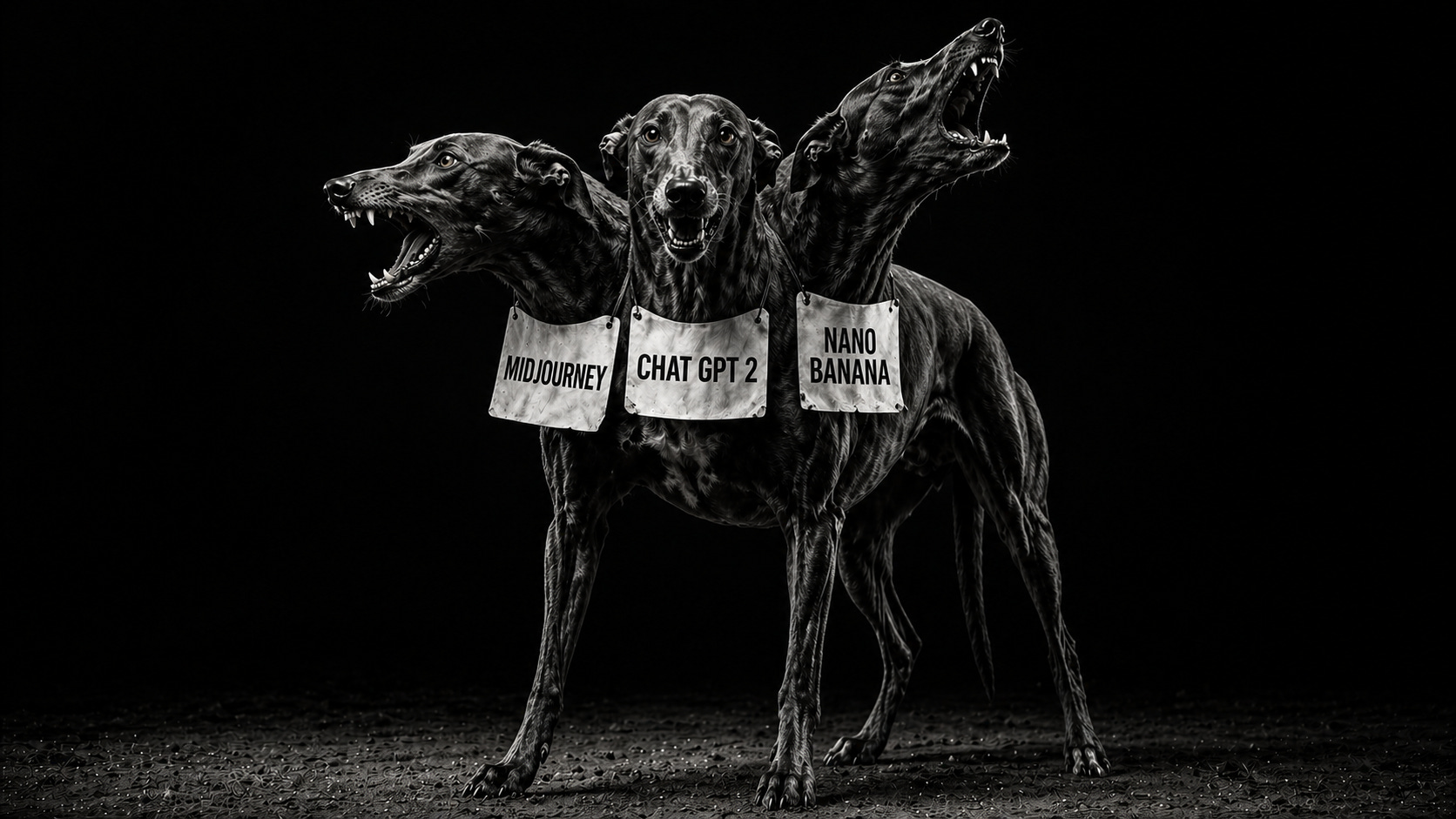
The trophy keeps moving.
That is the first thing you need to accept about GenAI image tools.
One month it sits with Midjourney. Then Google drops something and the conversation shifts. Now ChatGPT Image 2 is pulling focus and everyone is scrambling to learn a new interface, a new workflow, a new set of rules.
This has been the pattern in GenAI creative since 2022. It will keep being the pattern.
Here is what most people are missing.
A short history of who held the crown
Midjourney changed the game when it launched in open beta in July 2022. For the first time, creatives without technical backgrounds could generate high-quality, artistic imagery from simple text prompts. The outputs were painterly, cinematic, and atmospheric. It set the early benchmark for AI creative workflows and built a passionate cult following almost immediately. For roughly two years, it was the undisputed go-to standard for stylized and artistic image generation. Studios, agencies, and solo creatives built entire GenAI systems around it.
Google’s Imagen-powered models, known publicly as Nano Banana (including Nano Banana 2 and Nano Banana Pro, built on Gemini 3), arrived and shifted the conversation toward photorealism and practical usability. Where Midjourney leaned artistic and stylized, Nano Banana pushed toward believable, production-ready results—superior skin textures, material quality, environmental coherence, and accurate text rendering. It raised the bar for commercial, product, and professional workflows and drew serious attention from teams needing reliable, photorealistic assets.
ChatGPT Images 2.0 (released April 21, 2026) is currently one of the strongest front-runners for many creatives. Its deep integration with a conversational interface fundamentally changed how people interact with AI image generation. You can iterate in plain language, describe adjustments the way you would to a colleague, and leverage the model’s reasoning capabilities for complex refinements. The barrier dropped again, prompt adherence and output quality improved dramatically, and the trophy moved once more.
Subscribe for More AI Creative Workflows.
Get it straight to your inbox. AI creative workflows, prompt direction guides, and GenAI production systems.
Here is the real problem.
Every time the trophy moves, people chase it.
They abandon their prompts. They restart their learning. They spend weeks re-calibrating to a new tool instead of compounding on what they already know.
The tools are not the investment. The prompt direction is.
A well-structured prompt travels across every GenAI creative platform. It describes light, material, mood, composition, and narrative with enough precision that any capable model can interpret it. The phrasing evolves slightly. The logic stays the same.
The creatives consistently producing the best outputs across every tool shift are not the ones who learned each tool fastest. They are the ones who built deep prompt direction fluency and applied it everywhere.
Text prompt is the blood currency of GenAI creative production. Tools change. Your ability to describe what you want with clarity and specificity does not expire.
The rule is simple.
Invest in understanding. Not in tools.
Learn how to describe light before you learn which slider controls it. Learn how to write a scene before you learn which model renders it best. Learn what makes a GenAI image feel real before you chase whatever is trending this week.
The tool will change again. It always does.
Your prompts are the only thing you keep.
STIRMIND publishes GenAI workflows, AI creative systems, and prompt direction breakdowns for creatives who want to move from concept to final output with clarity and control. Subscribe free below.
Frederick Tadeo · STIRMIND™ · stirmind.com · GenAI Creative Lead, Dubai · Create with clarity and control.